Best Games for Players Who Love Exploration
Discover the best games for players who love exploration, from massive open worlds and mysterious landscapes to underwater environments, forgotten ruins, and procedurally generated adventures. Explore standout games that reward curiosity, discovery, and getting off the beaten path.
 NorthGames
Best Games for Players Who Love Exploration
Exploration is one of the most rewarding experiences in video games. While some players enjoy competition, difficult combat, or carefully structured missions, others simply want to enter a world and discover what is waiting around the next corner.
The best exploration games make curiosity part of the gameplay. They give players reasons to leave the main path, investigate unusual locations, climb mountains, enter abandoned buildings, search for hidden areas, or travel across an enormous landscape without knowing exactly what they will find.
Some games offer carefully designed worlds filled with secrets, while others provide enormous environments where exploration itself becomes the main objective. Here are some standout games for players who enjoy discovering virtual worlds.
The Legend of Zelda: Tears of the Kingdom
The Legend of Zelda: Tears of the Kingdom is an excellent example of exploration built around player creativity.
Hyrule is not simply a large map filled with destinations. Players can explore the surface, the sky, and the enormous Depths beneath the world. Each area offers different environmental challenges and discoveries.
The Ultrahand ability makes exploration particularly interesting because players can construct vehicles and machines from objects found throughout the world. A mountain that looks difficult to reach can become accessible through an improvised flying machine, while environmental puzzles can often be solved in several different ways.
The game rewards players who experiment rather than simply follow objective markers.
Red Dead Redemption 2
Red Dead Redemption 2 approaches exploration through realism and environmental detail.
The world contains towns, forests, mountains, rivers, deserts, wildlife, settlements, and numerous smaller locations. Many interesting encounters happen while traveling rather than during the main storyline.
You can discover a remote cabin, encounter wildlife, find a stranger with a problem, stumble upon a hidden location, or simply spend time traveling through the wilderness.
The game's environmental details make exploration feel meaningful. Weather changes, wildlife behavior, NPC routines, and the changing landscape contribute to the feeling that the world exists independently of the main story.
For players who enjoy slow-paced exploration, this approach can be particularly rewarding.
Elden Ring
Elden Ring takes exploration in a much more mysterious direction.
The game frequently avoids telling players exactly where they should go. Instead, unusual structures, distant landmarks, strange enemies, caves, underground areas, and hidden paths encourage players to investigate.
A seemingly insignificant location can lead to an entirely different area or reveal an important item, enemy, quest, or piece of world-building.
The Lands Between is also designed vertically. Exploration is not limited to moving across a flat landscape. Players can discover underground regions, elevated areas, hidden routes, and locations that initially appear inaccessible.
For players who enjoy discovering things without constant guidance, the game's approach to exploration is particularly distinctive.
No Man's Sky
Few games place exploration as directly at the center of their identity as No Man's Sky.
The game allows players to travel across an enormous procedurally generated universe containing planets, space stations, alien environments, resources, creatures, and different planetary conditions.
One planet might contain unusual wildlife and colorful landscapes, while another could feature hostile environmental conditions.
The appeal is largely based on discovery. Players can scan creatures, collect resources, build bases, upgrade equipment, and travel to new planets.
For someone who enjoys the idea of looking at a distant planet and wondering what is actually there, No Man's Sky offers a particularly broad exploration experience.
Subnautica
Exploration does not have to happen on land.
Subnautica demonstrates how an underwater setting can create an entirely different form of exploration. Players begin with limited resources and gradually discover increasingly dangerous and mysterious areas beneath the ocean.
Depth becomes an important part of progression. As equipment improves, players can travel deeper and reach environments that were previously inaccessible.
The game also uses uncertainty effectively. Dark underwater areas, unfamiliar creatures, abandoned structures, and strange environmental formations encourage players to investigate while creating a constant sense of danger.
Subnautica is particularly suitable for players who enjoy exploration combined with survival mechanics.
Outer Wilds
Outer Wilds is one of the clearest examples of a game where knowledge itself becomes progression.
Instead of relying primarily on traditional character upgrades, the game encourages players to learn about its solar system.
Planets contain unusual environmental systems, hidden locations, ancient structures, and clues about what happened in the past.
The more you discover, the better you understand how different locations and events are connected.
This makes exploration feel like solving a giant mystery. Finding a new piece of information can completely change your understanding of an area you previously visited.
For players who enjoy curiosity, investigation, and environmental storytelling, Outer Wilds offers a very different type of adventure.
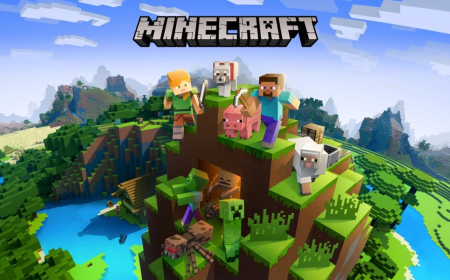
Minecraft
Minecraft provides perhaps one of the most flexible exploration experiences in gaming.
Players can explore enormous procedurally generated worlds containing forests, deserts, oceans, mountains, caves, villages, and other structures.
The simplicity of the game's visual design does not limit its sense of discovery. Underground caves can lead to unexpected locations, while traveling far from the starting area can reveal completely different landscapes.
Exploration also connects directly with building and survival. Players gather resources from the environments they discover and use them to create bases, farms, transportation systems, and increasingly ambitious constructions.
Because worlds are generated differently, every new game can produce different exploration opportunities.
Horizon Forbidden West
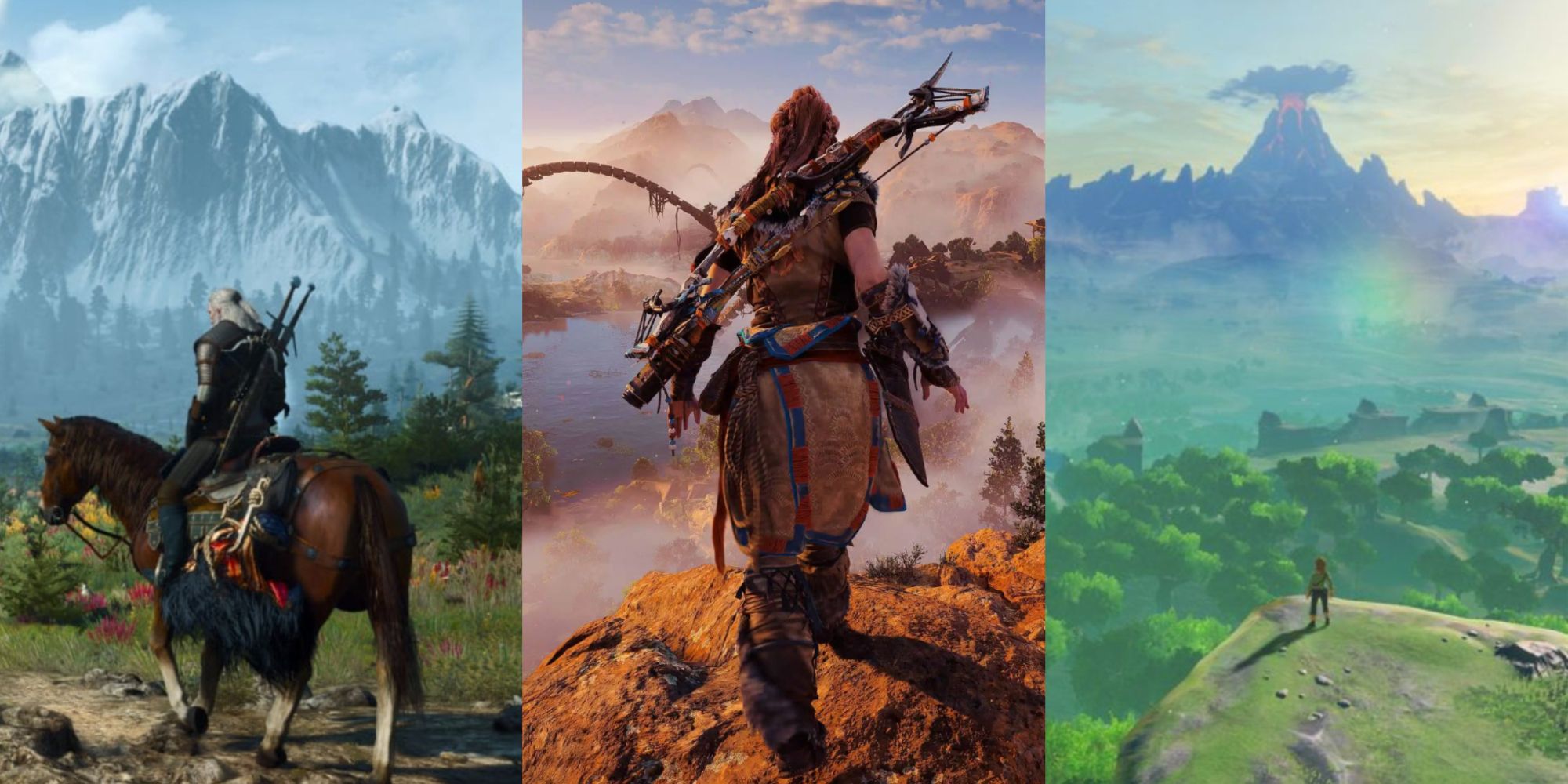
Horizon Forbidden West combines traditional open-world exploration with a visually detailed science-fiction setting.
Players travel through forests, deserts, mountains, underwater environments, settlements, and ancient ruins while discovering more about the world and its history.
One of the interesting aspects of exploration is the combination of natural environments and futuristic technology. Machines roam across the landscape, while remnants of the old world appear throughout the environment.
The game also provides tools that help players reach areas that might initially seem inaccessible, creating a stronger connection between exploration and character progression.
Death Stranding 2: On the Beach
Death Stranding 2: On the Beach takes a slower and more unusual approach to exploration.
Instead of treating the world simply as a place to travel between combat encounters, the game makes movement itself a major part of the experience.
Players need to consider terrain, routes, equipment, environmental conditions, and the safest way to transport cargo.
This makes the landscape an important gameplay system rather than just a background.
For players who enjoy methodical exploration and unusual world design, Death Stranding's approach is very different from traditional open-world adventures.
Ghost of Tsushima
Ghost of Tsushima combines exploration with a carefully designed historical setting.
The island of Tsushima contains forests, villages, coastlines, temples, mountains, and other locations that encourage players to travel beyond the main objectives.
One particularly effective design choice is the use of environmental guidance. Instead of relying entirely on large numbers of map markers, natural elements such as wind can help direct the player.
This allows exploration to remain visually integrated into the world rather than constantly requiring the player to look at a map.
Assassin's Creed Odyssey
Assassin's Creed Odyssey offers a massive historical setting inspired by ancient Greece.
Players can travel between cities, islands, forests, mountains, ruins, and coastal regions. Exploration is closely connected to the game's historical setting, with landmarks and locations providing context for the world.
The ability to travel across land and sea also creates variety. Players can move through settlements on foot, climb structures, explore ruins, or sail between islands.
For players who enjoy large maps combined with historical environments, Odyssey provides plenty of locations to investigate.
Baldur's Gate 3
Exploration in Baldur's Gate 3 is different from traditional open-world games.
The world is divided into substantial areas rather than one continuous massive map, but these environments are filled with hidden locations, alternative routes, interactive objects, secrets, and unexpected encounters.
Players can often approach an area from multiple directions.
A locked door might be opened with a spell, bypassed through another route, or simply destroyed. A seemingly ordinary location can contain a hidden basement or another path that leads somewhere unexpected.
This makes exploration closely connected to the game's role-playing systems.
Valheim
Valheim combines exploration with survival and construction.
Players begin in a mysterious wilderness and gradually travel through different biomes, each containing distinct resources, enemies, environmental conditions, and dangers.
Exploration is closely connected to progression. New regions provide materials needed to craft stronger equipment, construct better bases, and prepare for increasingly difficult challenges.
The procedural nature of the world also makes navigation and discovery important parts of the experience.
What Makes Exploration Games So Enjoyable?
The strongest exploration games usually share several characteristics.
A World Worth Investigating
A large environment is not enough. Players need interesting reasons to explore it.
Hidden locations, environmental storytelling, rare resources, unusual enemies, secret quests, and unexpected encounters can all provide motivation.
Meaningful Discovery
Finding something should feel rewarding.
A new weapon, mysterious structure, beautiful location, important story clue, or previously unknown creature can all give exploration a purpose.
Freedom of Movement
Exploration becomes more enjoyable when players have multiple ways to travel.
Climbing, swimming, flying, sailing, gliding, vehicles, mounts, and other movement systems can make the world feel less restrictive.
Minimal Hand-Holding
Some players prefer detailed maps and objective markers, but exploration-focused games can benefit from leaving certain discoveries to the player.
A distant tower or strange structure becomes much more interesting when the player decides to investigate it without being explicitly instructed to do so.
Choosing the Right Exploration Game
Different exploration games appeal to different types of players.
If you want open-world exploration, games such as Red Dead Redemption 2, Elden Ring, and The Legend of Zelda: Tears of the Kingdom offer very different approaches.
If you prefer mystery and discovery, Outer Wilds provides a more investigation-focused experience.
For survival exploration, Subnautica, Minecraft, and Valheim combine discovery with resource management.
If you prefer science-fiction exploration, No Man's Sky and Horizon Forbidden West offer large futuristic environments.
For story-focused exploration, games such as Death Stranding 2 and Baldur's Gate 3 connect exploration with narrative and character development.