Upcoming Open-World Games Worth Watching
Discover the upcoming open-world games worth watching, featuring ambitious RPGs, action adventures, survival experiences, fantasy worlds, and highly anticipated titles coming to PC and consoles.
 NorthGames

Upcoming Open-World Games Worth Watching
Open-world games continue to be one of the most ambitious and popular genres in modern gaming. Instead of moving through a strictly linear series of levels, players can explore large environments, discover hidden locations, complete optional quests, interact with characters, and decide how they want to approach different challenges.
The next wave of open-world releases is particularly interesting because developers are experimenting with more detailed environments, dynamic weather, advanced artificial intelligence, survival mechanics, realistic simulations, and deeper player freedom.
Here are several upcoming open-world games worth watching.
Crimson Desert
Crimson Desert is one of the most ambitious upcoming open-world action games.
Developed by Pearl Abyss, the studio behind Black Desert, the game takes place on the fictional continent of Pywel and follows Kliff, the leader of the Greymanes.
The gameplay combines exploration, melee combat, ranged weapons, horseback travel, climbing, grappling, and encounters with enormous creatures.
One of the most impressive aspects of Crimson Desert is its focus on environmental interaction. Gameplay demonstrations have shown Kliff climbing structures, using a grappling hook, fighting enemies, riding across the landscape, and interacting with the environment.
The game could appeal to players looking for a large fantasy world without relying entirely on traditional RPG conventions.
The Witcher 4
CD PROJEKT RED's The Witcher 4 is another major open-world project that deserves attention.
The game places Ciri at the center of the story, moving the franchise into a new chapter after Geralt's adventures.
The title is being developed using Unreal Engine 5, providing the studio with a modern technological foundation for its next fantasy world.
The Witcher 4 will have considerable expectations to meet because The Witcher 3: Wild Hunt became one of the most influential open-world RPGs of its generation.
The new game will need to deliver more than a large map. Players will likely expect memorable quests, meaningful choices, detailed towns, interesting characters, and a world that feels alive beyond the main storyline.
Fable
The return of Fable is particularly interesting because the franchise has been absent from the main spotlight for a long time.
Developed by Playground Games, the new Fable is set in the series' distinctive fantasy world and aims to introduce the franchise to a modern audience.
The original games were known for combining fantasy adventure with humor, morality systems, character development, and unusual interactions with the world.
The new game has an opportunity to expand those concepts with modern open-world technology.
For RPG fans, the most interesting question will be whether Playground Games can preserve Fable's distinctive personality while creating a much larger and more detailed environment.
Dune: Awakening
Dune: Awakening takes a different approach to open-world design.
Developed by Funcom, the game combines survival mechanics, online multiplayer, exploration, crafting, and the universe of Dune.
Players explore Arrakis, an extremely dangerous desert planet where water is one of the most valuable resources.
Survival therefore becomes part of exploration. Players must consider resources, shelter, equipment, transportation, and environmental hazards.
The enormous sandworms are another major element of the experience. Traveling across open desert requires players to understand the environment and avoid attracting dangerous creatures.
Dune: Awakening could be especially appealing to players who enjoy survival games but want a more structured world and recognizable science-fiction setting.
Monster Hunter Stories 3: Twisted Reflection
The Monster Hunter franchise is usually associated with hunting enormous creatures, but the Monster Hunter Stories series takes the universe in a different direction.
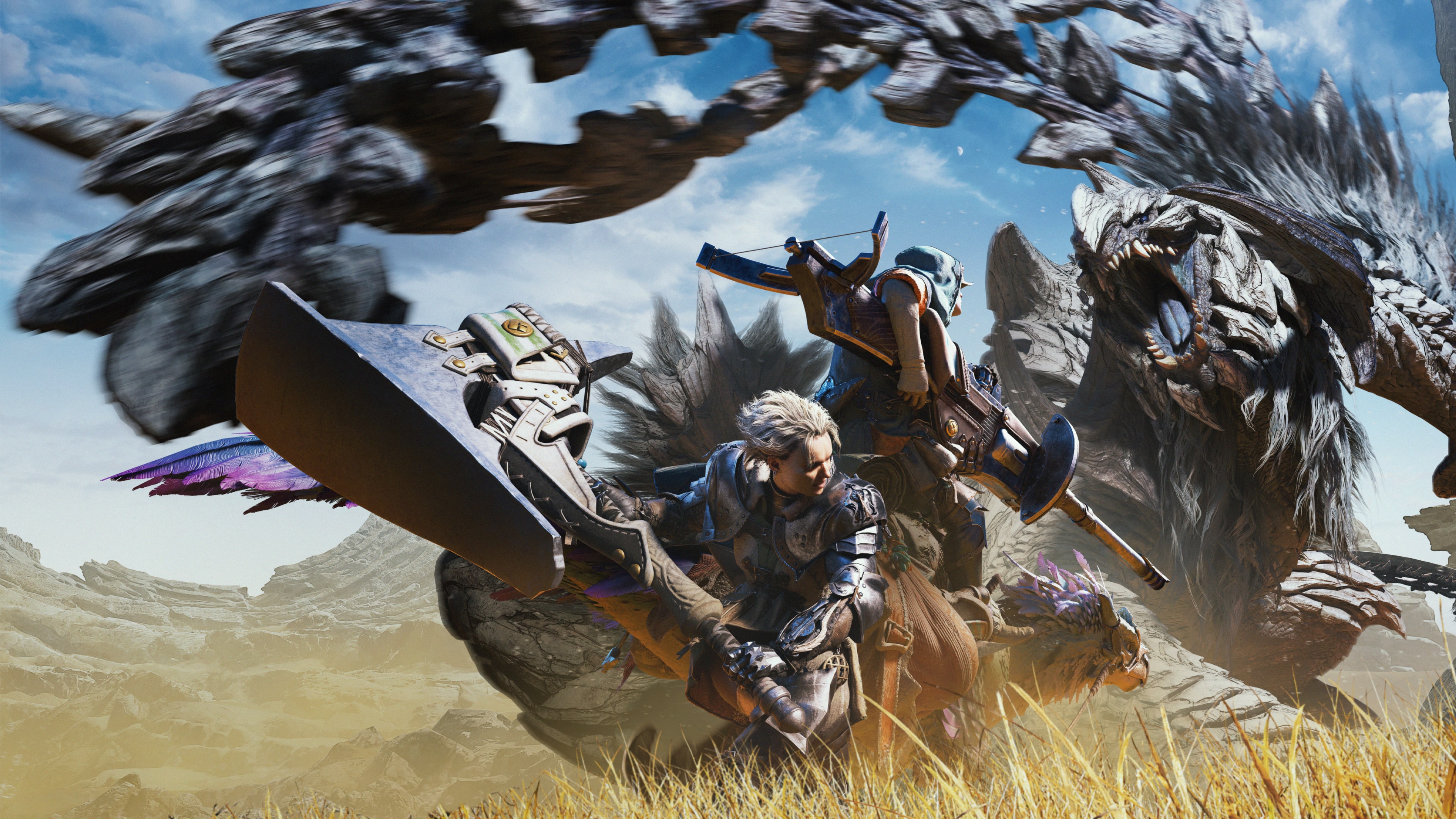
Monster Hunter Stories 3: Twisted Reflection expands the RPG side of the franchise with a stronger emphasis on exploration, story, character development, and monster companions.
Rather than simply hunting monsters, players can build relationships with them and use them as companions.
This creates a different type of open-world adventure compared with traditional Monster Hunter games.
The title is particularly interesting for players who enjoy creature collection and turn-based RPG mechanics alongside exploration.
Pokémon Legends: Z-A
Pokémon Legends: Z-A takes the Pokémon franchise into a more urban setting centered around Lumiose City.
The game's focus on a single major city creates an interesting alternative to the traditional structure of traveling between multiple towns and routes.
Players can explore the city, encounter Pokémon, participate in battles, and experience a new story within the Pokémon universe.
The project is also notable because the Pokémon franchise has historically experimented with different approaches to exploration, and Legends: Z-A provides another opportunity to rethink how a Pokémon world can be designed.
Assassin's Creed: Black Flag Reshaped
The Assassin's Creed franchise has always had a strong connection with open-world design, and the return of the Black Flag era is particularly interesting for fans of exploration and naval gameplay.
The original Assassin's Creed IV: Black Flag became famous for its combination of Caribbean exploration, ship combat, island environments, treasure hunting, and traditional Assassin's Creed missions.
A modern interpretation of that formula could potentially take advantage of improved technology to create more detailed oceans, cities, ships, wildlife, and environmental systems.
For players who enjoyed open-world exploration combined with naval combat, this is an especially interesting project to follow.
Why Open-World Games Continue to Be Popular
Open-world games provide something that linear games cannot offer in exactly the same way: freedom.
Players can decide whether to follow the main storyline or explore the environment.
They might discover a hidden cave, encounter a random event, find an unusual weapon, complete a side quest, or simply travel across the landscape.
This freedom also creates memorable personal experiences.
Two players can play the same open-world game but experience completely different events because they explored different locations or made different choices.
A Bigger Map Does Not Always Mean a Better Game
One important lesson from modern open-world development is that size alone does not determine quality.
A massive map filled with repetitive activities can quickly become boring.
The strongest open-world games make their environments meaningful.
A small village should have interesting characters.
A forest should contain reasons to explore it.
A mountain should provide a memorable challenge.
A side quest should ideally tell a story or introduce an interesting mechanic rather than simply asking players to collect ten identical objects.
This is why upcoming open-world games will be judged by world density and interaction, not just map size.
Dynamic Worlds Are Becoming More Important
Modern developers are increasingly attempting to make open worlds react to player actions.
Weather systems, wildlife, NPC routines, changing economies, faction relationships, and environmental events can make a world feel less static.
For example, a game might have NPCs who follow daily routines rather than simply standing in one location waiting for the player.
Similarly, weather can influence visibility, combat, travel, or survival.
These systems can make exploration feel more organic and unpredictable.
Open-World Games and Player Choice
Another major trend is greater player freedom.
Instead of giving players one solution to every problem, developers can provide multiple approaches.
A player might use stealth, direct combat, diplomacy, exploration, crafting, or environmental interaction depending on the game.
This approach increases replay value and gives players more control over their experience.
What Players Should Watch Before Release
When evaluating an upcoming open-world game, the map size should not be the only consideration.
Players should look for information about:
- World design
- Quest quality
- NPC behavior
- Exploration mechanics
- Fast travel
- Combat systems
- Character progression
- Environmental interaction
- Vehicle or mount systems
- Graphics and performance
- Platform availability
- Post-launch support
Gameplay demonstrations are especially valuable because they reveal how the world actually functions rather than simply showing cinematic scenes.