New Strategy Games for Fans of Tactical Gameplay
Discover new strategy games for fans of tactical gameplay, including turn-based strategy, real-time tactics, grand strategy, city building, and challenging games that reward careful planning.
 NorthGames
New Strategy Games for Fans of Tactical Gameplay
Strategy games have always offered something different from fast-paced action titles. Instead of relying primarily on reflexes, players need to think ahead, manage resources, study opponents, position units carefully, and make decisions that can have consequences several turns or minutes later.
Modern strategy games are also becoming increasingly diverse. Traditional turn-based games now compete with real-time strategy titles, grand strategy experiences, tactical RPGs, city builders, and hybrid games that combine several genres.
For players who enjoy planning every move, managing complex systems, and finding creative solutions to difficult situations, there are plenty of interesting strategy games to watch.
Civilization VII
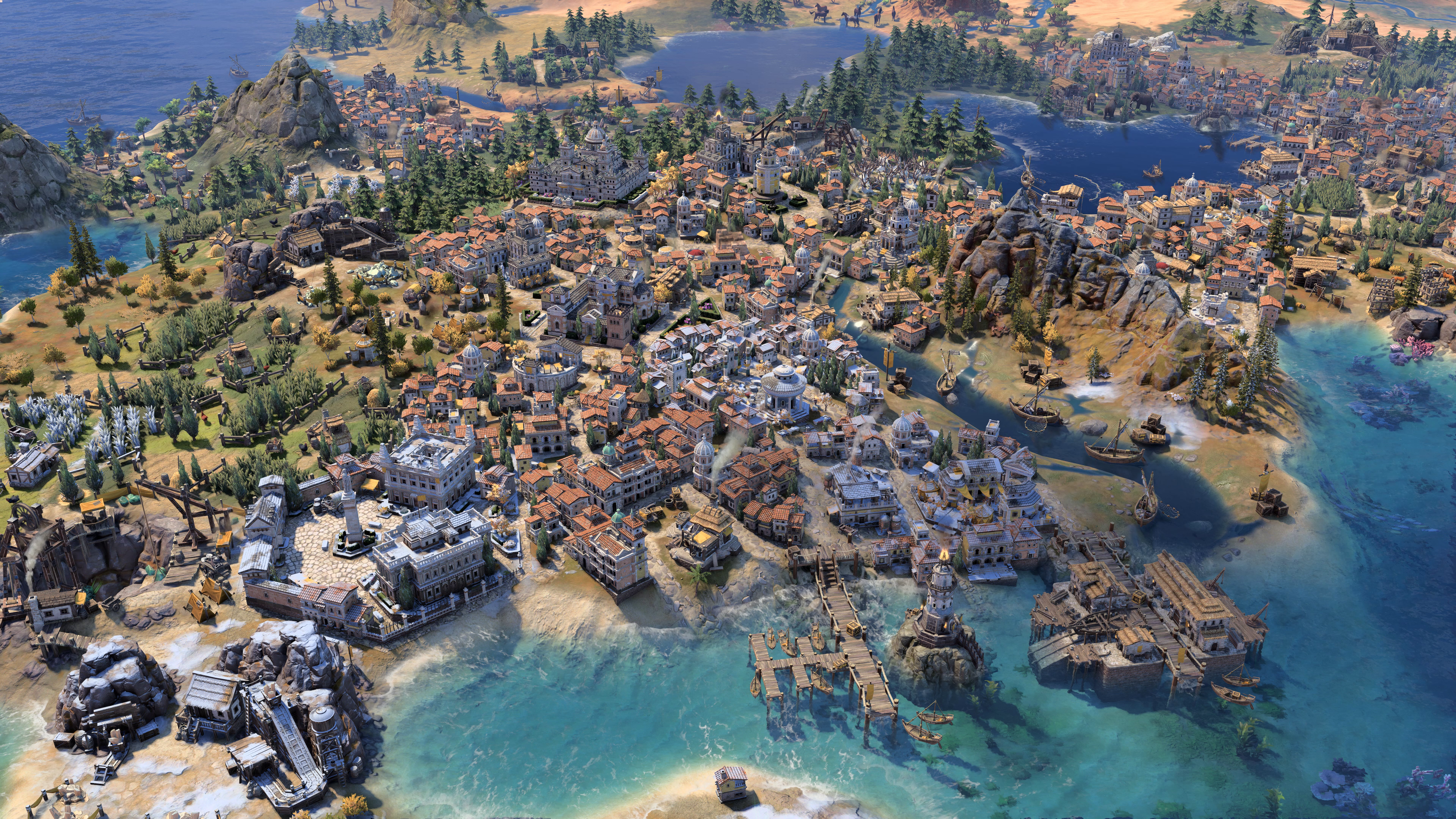
Civilization VII is one of the biggest recent releases for fans of turn-based strategy.
Developed by Firaxis Games, the latest entry in the long-running Civilization series allows players to guide civilizations through different historical periods.
Players must balance several competing priorities, including:
- Expanding territory
- Managing cities
- Developing technology
- Researching civics
- Establishing diplomatic relationships
- Building military forces
- Managing resources
- Developing infrastructure
One of the game's notable ideas is its approach to historical progression. Civilizations can evolve across different ages, creating new strategic situations as the game develops.
The appeal of Civilization has always been its ability to turn relatively simple decisions into complicated long-term consequences. Choosing where to establish a city early in the game can affect resources, defense, trade, and expansion much later.
XCOM: Chimera Squad
For players who prefer smaller-scale tactical combat, the XCOM formula remains highly influential.
XCOM: Chimera Squad introduced a different approach to the traditional series by allowing players to control a team of unique characters with individual abilities and personalities.
Combat takes place in turn-based encounters where positioning is critical.
A unit standing in the wrong location can become vulnerable to multiple enemies, while a carefully planned attack can eliminate a dangerous opponent before it gets an opportunity to act.
The game's emphasis on specialized characters also demonstrates why tactical RPGs can be so engaging. Every member of the team can contribute differently, meaning players must consider how abilities interact.
Frostpunk 2
Frostpunk 2 combines city building, resource management, political decision-making, and survival strategy.
The game takes place in a frozen world where humanity is attempting to survive extreme environmental conditions.
Players must manage a growing settlement while dealing with limited resources and competing political interests.
The strategic challenge is not simply keeping people alive.
Decisions can create social conflicts, influence different factions, and determine how the city develops.
This makes Frostpunk 2 particularly interesting for players who enjoy strategy games where economic and political decisions are as important as traditional military tactics.
Manor Lords
Manor Lords offers a distinctive combination of medieval city building and real-time tactical warfare.
Developed by Slavic Magic, the game emphasizes realistic medieval settlements, economic management, territorial expansion, and large-scale battles.
Players need to think about where buildings are placed, how resources are transported, and how settlements develop.
Military encounters require additional planning. Terrain, unit formations, positioning, and timing can all influence the outcome of a battle.
The game is particularly appealing because the city-building and military systems are closely connected. Economic decisions can directly influence military capabilities.
Company of Heroes 3
Company of Heroes 3 provides a more traditional real-time strategy experience centered around World War II.
Players control military units in real time and need to make rapid tactical decisions.
Cover is especially important. Infantry units positioned behind suitable cover can survive attacks that would be devastating in an exposed position.
Players also need to consider flanking, artillery, vehicle support, terrain, and unit composition.
This makes the game an excellent example of how real-time strategy can combine quick decision-making with careful tactical planning.
Total War: Warhammer III
Total War: Warhammer III combines two different layers of strategy.
The first is the campaign map, where players manage territories, diplomacy, armies, resources, and economic development.
The second is the real-time battlefield, where armies fight directly.
This combination creates a particularly deep experience.
A player can have a powerful army but still lose a battle because of poor positioning or ineffective tactics. Conversely, a smaller force can sometimes defeat a larger army by using terrain, unit abilities, and intelligent formations.
The Warhammer universe also provides an enormous variety of factions, making different campaigns feel very different from one another.
Age of Mythology: Retold
Age of Mythology: Retold demonstrates how classic real-time strategy games can be modernized for contemporary players.
The game combines resource management, settlement development, military production, and mythological powers.
Players can choose civilizations inspired by cultures such as the Greeks, Egyptians, Norse, and Atlanteans, each offering different units and strategic options.
Mythological creatures and divine abilities add another layer to traditional RTS gameplay.
The result is a strategy experience where economic development and military planning must work together.
Into the Breach
For players who prefer compact tactical experiences, Into the Breach is an excellent example of minimalist strategy design.
The game uses small battlefields and turn-based combat, but every action can have significant consequences.
Enemies often reveal their intended attacks, allowing players to plan how they will respond.
This creates a fascinating strategic puzzle: the objective is not always to destroy every enemy. Sometimes the best move is to push an enemy away, protect a civilian structure, or manipulate its attack direction.
The game demonstrates that strategy does not require enormous maps or hundreds of units.
What Makes Tactical Strategy Games Different?
The defining characteristic of tactical strategy is decision quality.
In an action game, a player may have only a fraction of a second to react.
In a turn-based tactical game, the player may have considerably more time to analyze the battlefield.
This changes the nature of the challenge.
Players can examine:
- Enemy positions
- Available movement
- Weapon ranges
- Terrain
- Character abilities
- Health levels
- Objectives
- Potential future moves
The challenge becomes predicting consequences rather than simply reacting to events.
Positioning Can Be More Important Than Firepower
One of the most important principles in tactical gaming is that a stronger unit does not automatically win.
Positioning can determine the outcome of an encounter.
A unit behind cover may survive several attacks.
A unit on higher ground may gain a tactical advantage.
A group positioned on a narrow passage can potentially stop a larger force.
Flanking an enemy can expose weaknesses that direct attacks cannot exploit.
This is why experienced strategy players often spend more time planning movement than attacking.
Resource Management Creates Long-Term Decisions
Many strategy games also require players to manage limited resources.
These can include:
- Gold
- Food
- Wood
- Stone
- Energy
- Population
- Technology
- Military production capacity
Spending resources on one area usually means sacrificing another.
For example, investing heavily in military units may provide immediate security but slow economic development.
Investing in technology may create long-term advantages but leave the player vulnerable in the short term.
These trade-offs are what make strategy games particularly rewarding.
Turn-Based vs. Real-Time Strategy
Both approaches offer different challenges.
Turn-Based Strategy
Turn-based games allow players more time to analyze situations and plan their actions.
Examples include Civilization VII, XCOM: Chimera Squad, and Into the Breach.
They are ideal for players who enjoy carefully calculating several moves ahead.
Real-Time Strategy
Real-time strategy games require decisions to be made while the game is constantly moving.
Games such as Company of Heroes 3 and Age of Mythology: Retold require players to manage production, movement, combat, and resources simultaneously.
The result is a faster and more demanding experience.
Strategy Games Are Becoming More Accessible
Modern strategy games are also becoming easier for newcomers to understand.
Tutorials, difficulty settings, improved interfaces, recommended actions, and clearer explanations can help new players learn complicated systems.
This is important because strategy games have traditionally been considered difficult to approach.
A well-designed tutorial can introduce concepts gradually rather than overwhelming players with dozens of menus immediately.
Why Strategy Games Remain Popular
Strategy games offer something that many other genres cannot: a strong sense of ownership over decisions.
When a player wins a difficult battle because of a carefully planned maneuver, the victory feels earned.
When a civilization becomes a global power because of decades of intelligent decisions, the result feels personal.
Even failure can be interesting because players can identify what went wrong and attempt a different strategy in the next game.
This creates a natural reason to replay strategy games.