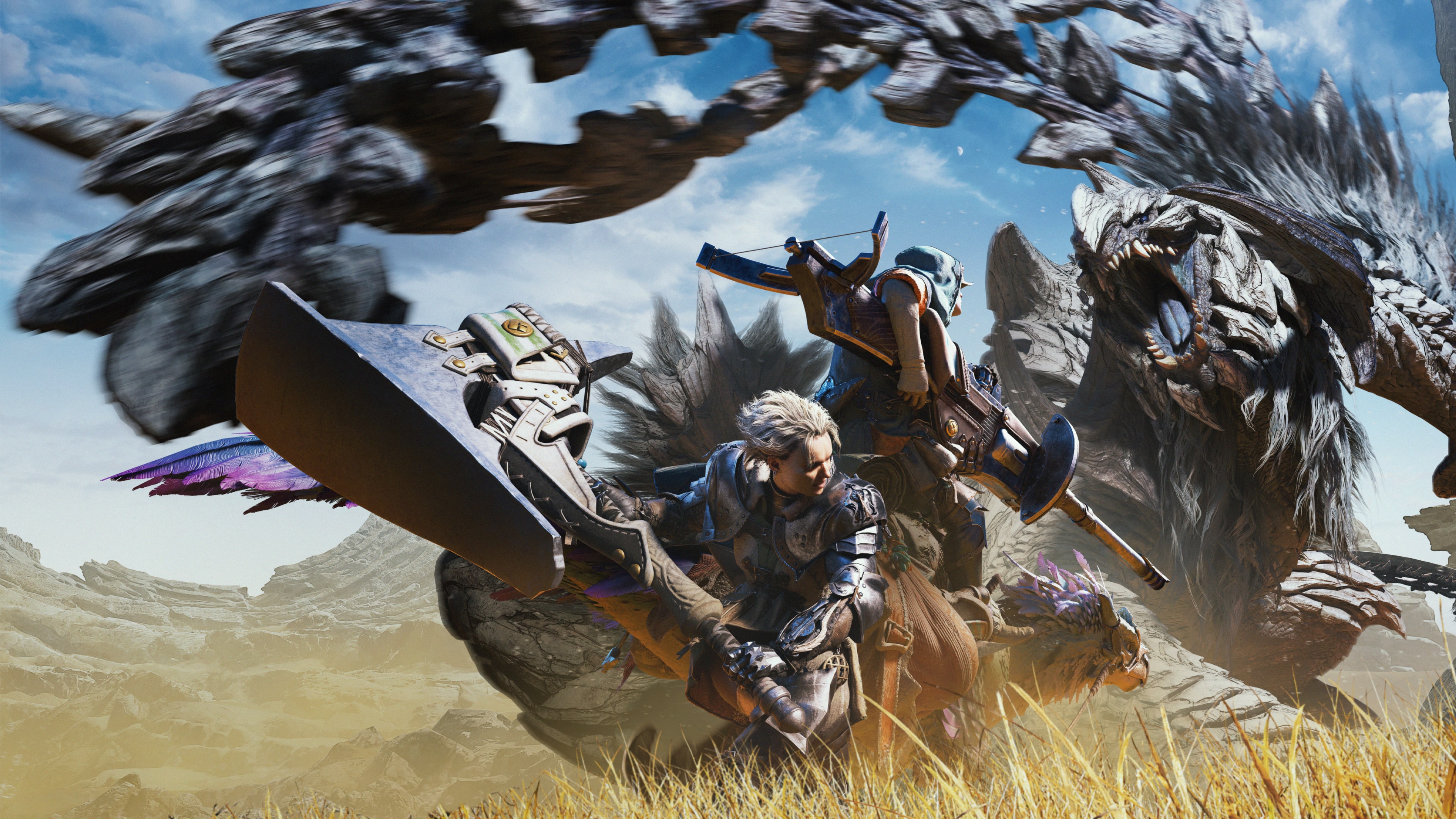
The Latest Trends Shaping the Gaming Industry
Explore the latest trends shaping the gaming industry, from AI-powered game development and cloud gaming to live-service games, cross-platform play, indie development, virtual reality, and new gaming technologies.
 NorthGames
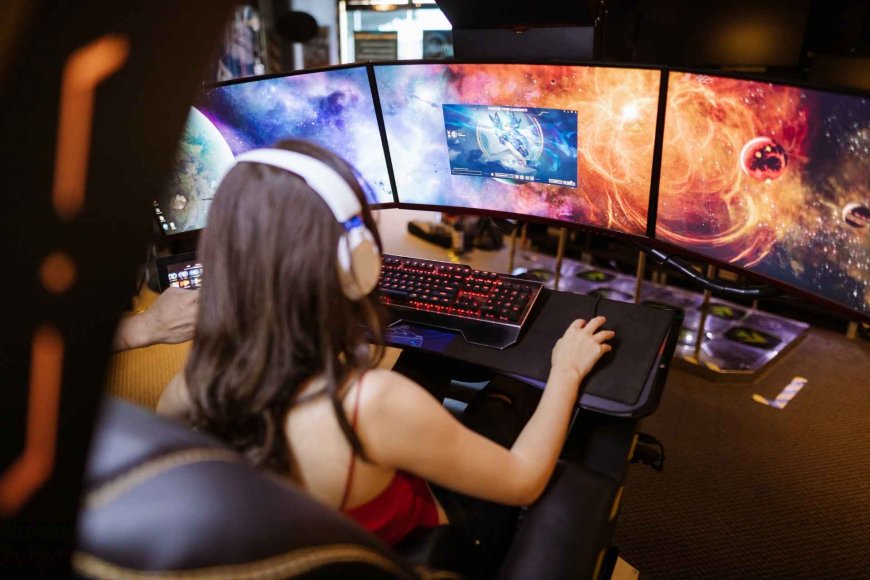
The Latest Trends Shaping the Gaming Industry
The gaming industry is changing rapidly. Improvements in hardware, artificial intelligence, online infrastructure, game engines, and digital distribution are influencing how games are created, released, and played.
The modern gaming market is also becoming more diverse. Players can now choose between traditional single-player adventures, competitive esports, free-to-play games, subscription services, cloud platforms, virtual reality experiences, and smaller independent productions.
Several important trends are likely to influence the direction of gaming in the coming years.
Artificial Intelligence Is Changing Game Development
Artificial intelligence is becoming increasingly important in game development. Developers can use AI-assisted tools for tasks such as concept creation, testing, animation support, dialogue prototyping, procedural content generation, and quality assurance.
One practical example is automated testing. A game can contain thousands of possible interactions, making manual testing extremely time-consuming. AI-assisted systems can potentially simulate different player behaviors and identify problems before release.
AI can also influence non-player characters. Instead of relying entirely on predefined behavior, future games may use more sophisticated systems that allow NPCs to react differently depending on the player's actions.
However, AI also raises important questions about creative ownership, employment, data usage, and the role of human developers. The technology is therefore likely to become a tool within game development rather than simply replacing traditional development teams.
Cloud Gaming Continues to Develop
Cloud gaming allows games to be processed on remote servers while the player's device receives the video stream.
Services such as Xbox Cloud Gaming, NVIDIA GeForce NOW, and Amazon Luna demonstrate how this model can reduce the need for powerful local hardware.
The biggest advantage is accessibility. A player with a relatively modest computer, tablet, television, or compatible mobile device may be able to access games that would otherwise require expensive hardware.
Latency remains one of the biggest technical challenges. Fast internet connections and geographically close servers can make cloud gaming significantly more responsive, but demanding genres such as competitive shooters still require extremely low input delay.
Cross-Platform Gaming Is Becoming More Important
Players increasingly expect to play with friends regardless of their preferred platform.
Cross-platform multiplayer allows PC, console, and sometimes mobile players to share the same online environment. Games such as Fortnite, Minecraft, Rocket League, and Call of Duty: Warzone have helped make cross-platform gaming familiar to millions of players.
This trend also changes the way gaming communities develop. A player's choice of hardware no longer necessarily determines which friends they can play with.
Live-Service Games Are Changing Long-Term Support
Traditional games often focused on delivering a complete experience at launch. The live-service model takes a different approach.
Games such as Destiny 2, Warframe, Final Fantasy XIV, and Helldivers 2 demonstrate how developers can continue adding content after release.
Updates can include:
- New maps
- Characters
- Weapons
- Story missions
- Seasonal events
- Cosmetic items
- Gameplay changes
- New multiplayer modes
This model can keep a successful game active for many years. However, maintaining a live-service title requires continuous development, server infrastructure, community management, and regular content updates.
The industry has also learned that launching too many live-service games simultaneously does not guarantee success. Players have limited time and tend to concentrate on the games that provide the most compelling long-term experiences.
Indie Games Continue to Influence Mainstream Gaming
Independent developers remain an important source of innovation.
Games such as Balatro, Vampire Survivors, Dredge, Dave the Diver, and Sea of Stars demonstrate the variety available outside traditional AAA development.
These games often succeed by focusing on a specific gameplay idea rather than attempting to compete directly with blockbuster productions in terms of graphical scale.
For example, Vampire Survivors built its appeal around extremely simple controls combined with increasingly complex progression and enemy encounters. Balatro transformed poker-inspired mechanics into a roguelike deck-building experience.
The success of these games shows that originality can be more important than production size.
Virtual Reality Is Expanding Beyond Traditional Gaming
Virtual reality continues to develop through devices such as Meta Quest 3, PlayStation VR2, and PC VR headsets.
VR provides something conventional gaming cannot completely reproduce: physical interaction with a three-dimensional virtual environment.
Games such as Beat Saber, Half-Life: Alyx, and Microsoft Flight Simulator demonstrate different applications of immersive technology. VR can be used for rhythm games, first-person adventures, simulation, training, and exploration.
The main challenges remain hardware cost, comfort, battery life for standalone devices, and the size of the VR software library.
Handheld Gaming Is Experiencing a New Era
Portable gaming has evolved significantly beyond traditional handheld consoles.
Devices such as the Steam Deck, ROG Ally, and Lenovo Legion Go have made it possible to play many PC games in a handheld format.
This has created a new category between traditional consoles and gaming laptops. Players can access large PC libraries while benefiting from a portable form factor.
Nintendo has also demonstrated the strength of hybrid gaming through the Switch platform, showing that players value the ability to move between handheld and television-based gaming.
Subscription Services Are Changing How Players Access Games
Game subscriptions have become another important part of the industry.
Instead of purchasing every game individually, players can access libraries through services such as Xbox Game Pass, PlayStation Plus, and EA Play.
This model can make it easier for players to experiment with games they might not otherwise purchase.
For developers and publishers, however, subscription economics are more complicated. Companies must determine how games are valued within a subscription catalog and how revenue is distributed.
As subscription libraries continue to expand, the way players discover and purchase games may change significantly.
Real-Time Graphics Are Becoming More Advanced
Modern graphics technology continues to push games toward increasingly detailed environments.
Technologies such as ray tracing, path tracing, temporal upscaling, and frame-generation systems are allowing developers to create more sophisticated lighting and rendering techniques.
Hardware from NVIDIA, AMD, and other manufacturers is helping bring these technologies to consumers.
At the same time, developers must balance visual quality against performance. A game with impressive lighting but inconsistent frame rates may provide a worse experience than a slightly less detailed game running smoothly.
This is why optimization remains just as important as graphical advancement.
Gaming Is Becoming More Social
Gaming is increasingly functioning as a social platform rather than simply an entertainment product.
Players communicate through voice chat, communities, streaming platforms, social features, clans, guilds, and competitive events.
Games such as Roblox and Minecraft demonstrate how players can become creators as well as consumers. User-generated content can create entire ecosystems around a game, giving players tools to build experiences for other players.
This trend could become even more important as developers provide increasingly powerful creation tools.
The Future of Gaming
The gaming industry is moving toward a more connected and technically sophisticated ecosystem. AI-assisted development, cloud gaming, cross-platform multiplayer, live-service models, handheld PCs, VR, subscription services, and advanced graphics are all contributing to this transformation.
However, technology alone does not determine whether a game succeeds. Strong gameplay, memorable characters, thoughtful design, good performance, and meaningful player experiences remain fundamental.
The most successful developers will likely be those that use new technology to improve these fundamentals rather than adopting new features simply because they are fashionable.