How to Write a Good Video Game Review
Learn how to write a good video game review with practical tips for evaluating gameplay, graphics, story, sound, performance, controls, progression, replayability, and overall player experience. Discover how to create detailed and useful game reviews with specific examples.
 NorthGames

How to Write a Good Video Game Review
A good video game review should do more than tell readers whether a game is enjoyable. It should explain what the game does, how it works, who it is suitable for, and what makes the experience different from other games.
A useful review gives readers enough information to decide whether a particular game matches their interests. Instead of simply writing "the graphics are great" or "the gameplay is fun," a strong review explains why those elements work and provides specific examples.
Whether you are reviewing a major AAA release such as Grand Theft Auto VI, an RPG like Baldur's Gate 3, an indie game such as Balatro, or a competitive title such as Street Fighter 6, the same basic principles can help you create a detailed and informative review.
Start With a Clear Introduction
The introduction should quickly explain what game you are reviewing and what kind of experience readers can expect.
Mention important basic information such as:
- Game title
- Developer
- Publisher
- Genre
- Platforms
- Release date
- Main gameplay concept
You do not need to turn the introduction into a list of technical specifications. Instead, use the information to establish context.
For example, a review of Hades could explain that it is a roguelike action game developed by Supergiant Games, built around repeated escape attempts from the Underworld. That immediately tells the reader what type of experience they are about to read about.
Explain the Gameplay in Detail
Gameplay should usually be one of the largest sections of a video game review.
Explain what the player actually does.
Instead of saying:
"The combat is excellent."
Describe the mechanics behind the combat.
Does the game focus on melee attacks, ranged weapons, abilities, combos, positioning, stamina, timing, or resource management?
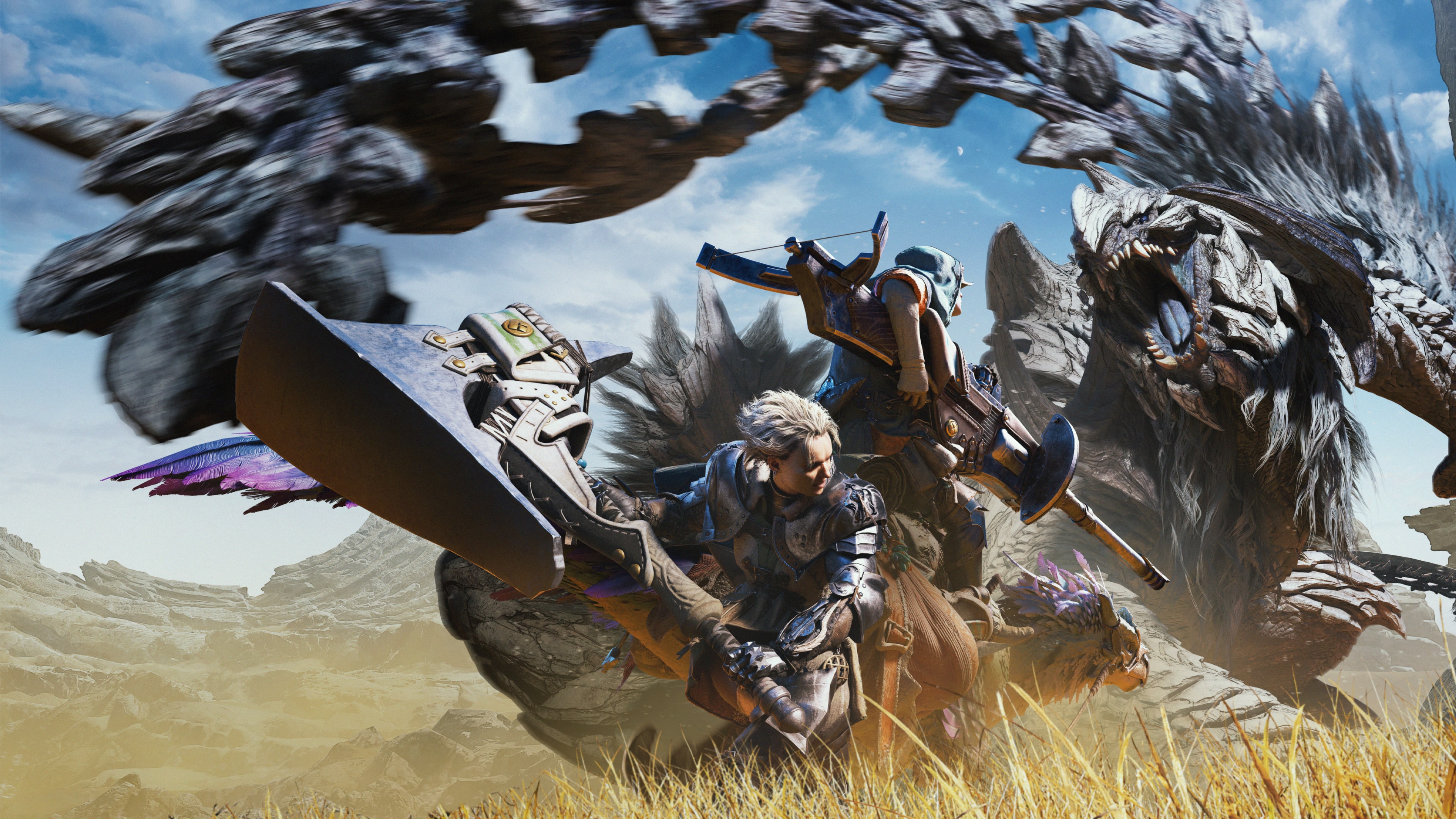
For example, Monster Hunter Wilds places significant emphasis on weapon variety, hunting large monsters, preparing equipment, and adapting to changing environments. A useful review would examine how these systems work together rather than simply describing the combat as "fun."
Specific details make a review much more useful.
Discuss the Controls
Controls can have a major effect on the gaming experience.
A game may have excellent mechanics but still feel uncomfortable if movement or combat controls are poorly designed.
When reviewing controls, consider:
- Character movement
- Camera controls
- Combat inputs
- Menu navigation
- Controller responsiveness
- Keyboard and mouse support
- Customization options
- Accessibility controls
For a racing game, steering response and braking controls can be particularly important. For a fighting game, input responsiveness and button layout can have a much greater impact.
Explain how the controls feel during actual gameplay rather than simply stating that they are "good" or "bad."
Analyze the Story Without Spoiling It
Story-focused games require careful handling of spoilers.
A review should provide enough information to explain the game's narrative style without revealing major twists.
You can discuss:
- Setting
- Main characters
- Narrative structure
- Themes
- Dialogue
- Character development
- Pacing
For example, when reviewing Alan Wake 2, you can discuss its psychological horror atmosphere, dual-protagonist structure, investigation mechanics, and unusual storytelling techniques without revealing major plot developments.
If you need to discuss significant story events, clearly warn readers about spoilers and keep the spoiler section separate.
Evaluate the Characters
Characters can determine whether players become emotionally invested in a story.
When reviewing characters, look beyond their appearance.
Consider whether they have:
- Clear motivations
- Distinct personalities
- Meaningful relationships
- Character development
- Interesting dialogue
- A believable role in the story
Role-playing games often deserve additional attention here because companions and relationships can represent a major part of the overall experience.
For example, Baldur's Gate 3 gives many companions their own personal conflicts, goals, dialogue, and storylines. A detailed review can examine how these characters interact with the player's decisions without simply summarizing their stories.
Examine the World and Level Design
World design is particularly important in open-world and exploration-focused games.
A large map does not automatically mean good world design.
Ask questions such as:
- Are locations visually and mechanically distinct?
- Is exploration rewarded?
- Are side activities meaningful?
- Does the environment tell a story?
- Are there interesting secrets?
- Do different areas provide different gameplay experiences?
In The Legend of Zelda: Tears of the Kingdom, exploration is closely connected to physics, environmental interaction, construction, and player creativity. Those systems should be discussed when evaluating its world rather than simply mentioning that the map is large.
Review the Graphics and Art Direction Separately
Graphics and art direction are related but not identical.
Graphics concern technical elements such as:
- Texture quality
- Lighting
- Character models
- Animation
- Draw distance
- Visual effects
- Resolution
Art direction concerns the game's overall visual identity.
A game can have technically modest graphics while having an outstanding artistic style. Cuphead is an obvious example because its visual identity is based heavily on hand-drawn animation inspired by classic cartoons.
On the other hand, a technically ambitious game can focus on realistic environments and advanced lighting.
A good review should explain both aspects.
Talk About Sound and Music
Audio is another important part of game design.
Consider:
- Music
- Voice acting
- Sound effects
- Environmental audio
- Weapon sounds
- Enemy sounds
- Audio positioning
In horror games, sound can be particularly important because footsteps, distant noises, environmental sounds, and sudden changes in music can create tension.
In action games, weapon and impact sounds can make combat feel more satisfying.
A soundtrack can also strengthen a game's identity and make specific locations or characters more memorable.
Discuss Performance
Performance should be an important part of modern game reviews.
A visually impressive game may still have problems if it suffers from:
- Frame-rate drops
- Stuttering
- Long loading times
- Crashes
- Texture pop-in
- Input latency
- Bugs
- Poor optimization
Mention the platform you tested because performance can vary considerably between PC and consoles.
For PC reviews, it can also be useful to provide the hardware configuration used during testing. Readers can then better understand the context of your performance observations.
Evaluate Progression Systems
Many modern games use progression systems to keep players engaged.
These can include:
- Character levels
- Skill trees
- Weapons
- Equipment
- Crafting
- Abilities
- Unlockable characters
- Cosmetic items
- Reputation systems
A good review should explain whether progression feels meaningful.
For example, if a new weapon significantly changes how the player approaches combat, that is more interesting than simply stating that the game contains "many weapons."
The key question is whether progression changes the player's experience.
Consider Replayability
Replayability is particularly important when reviewing games designed to be played repeatedly.
A game may encourage replay through:
- Multiple endings
- Different character builds
- Procedurally generated levels
- New Game Plus
- Competitive multiplayer
- Randomized challenges
- Branching decisions
- Different playable characters
Balatro, for example, derives much of its replayability from different card combinations, modifiers, strategies, and unpredictable runs.
A game does not necessarily need hundreds of hours of content to be replayable. A strong gameplay loop can be enough.
Mention the Difficulty
Difficulty should be described carefully.
Instead of simply saying that a game is "hard," explain how the difficulty works.
Does the game demand precise timing? Does it use powerful enemies? Does it punish mistakes heavily? Does the difficulty increase gradually?
Games such as Sekiro: Shadows Die Twice expect players to learn enemy patterns and master its combat systems. Other games may offer multiple difficulty settings that allow players to customize the experience.
Explain what type of player is likely to enjoy the game's challenge.
Consider Accessibility
Accessibility is an increasingly important part of game design.
When appropriate, review options such as:
- Subtitle customization
- Text size
- Color settings
- Controller remapping
- Difficulty adjustments
- Aim assistance
- Audio controls
- Visual indicators
- Reduced motion options
These features can significantly affect who can comfortably play a game.
Including accessibility information also makes a review more useful than a simple discussion of graphics and gameplay.
Compare the Game With Similar Titles
Comparisons can provide valuable context, but they should be specific.
Instead of saying:
"This is like every other RPG."
Explain which mechanics are similar and where the game differs.
For example, a review of an action RPG could compare its combat system with another well-known title while explaining differences in progression, exploration, difficulty, or storytelling.
The goal is not to declare one game universally better. The goal is to help readers understand what kind of experience they are getting.
Explain Who Should Play It
A useful review should finish by identifying the type of player who may enjoy the game.
For example:
This game may appeal to players who:
- Enjoy exploration
- Prefer challenging combat
- Like complex progression systems
- Want a long single-player campaign
- Enjoy experimenting with different character builds
You can also explain who may find the game less suitable.
For example, a highly demanding action game may not appeal to players looking for a relaxed experience, while a slow narrative adventure may not satisfy someone looking for constant combat.
This is much more informative than simply calling a game "great."
Avoid Excessive Spoilers
Spoilers can seriously reduce the value of a review for someone who has not played the game.
Keep major revelations, endings, character deaths, and important twists out of the main review whenever possible.
If detailed story analysis is necessary, create a clearly marked spoiler section.
A review should help readers decide whether to play the game, not remove the experience of discovering it themselves.
Use Specific Examples
Specific examples are one of the easiest ways to improve a game review.
Instead of writing:
"The world is very detailed."
Explain what makes it detailed.
For example, mention NPC routines, environmental storytelling, weather systems, wildlife behavior, destructible environments, hidden locations, or interactive objects if those elements are actually present.
Instead of saying:
"The combat is repetitive."
Explain which attacks, enemy types, encounters, or progression systems cause the repetition.
Specific observations make your review more credible and useful.
Write About Your Actual Experience
A good review should be based on genuine gameplay experience.
Avoid writing as though you have played a game extensively if you have only watched trailers or gameplay videos.
Ideally, spend enough time with the game to understand its core systems, progression, pacing, and performance. Large RPGs may require considerably more testing than a short indie title.
It is also useful to distinguish between your personal preference and an observable characteristic.
For example:
Personal preference:
"I prefer faster combat systems."
Descriptive observation:
"The combat relies heavily on stamina management and deliberate attack timing."
Both can be useful, but they communicate different things to the reader.
Create a Clear Review Structure
A consistent structure makes long reviews easier to read.
A practical format could be:
- Introduction
- Gameplay
- Controls
- Story
- Characters
- World and level design
- Graphics and art direction
- Sound and music
- Performance
- Progression
- Replayability
- Difficulty and accessibility
- Who should play it
- Final thoughts
You do not need every section for every game. A short puzzle game does not require the same structure as a 100-hour RPG.
Adapt the review to the game.
Optimize the Review for Search Engines
If you are publishing reviews on a gaming website, SEO can help readers discover your content.
Use the game's full name naturally in the title, introduction, headings, and relevant sections.
For example:
Baldur's Gate 3 Review: Gameplay, Story, Combat and Features
is more informative for both readers and search engines than:
Is This Game Worth Playing?
Include related terms naturally, such as the developer, platform, genre, gameplay mechanics, release information, and major features.
Avoid repeating the same keyword excessively. Search engines and readers both benefit from natural writing.